
Description
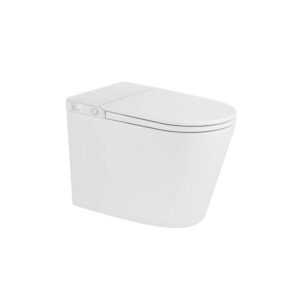
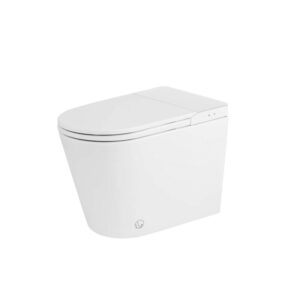
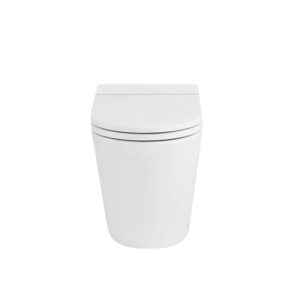
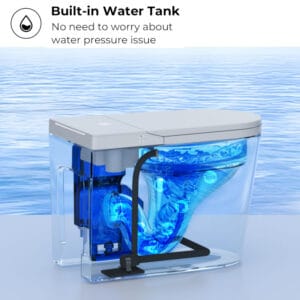
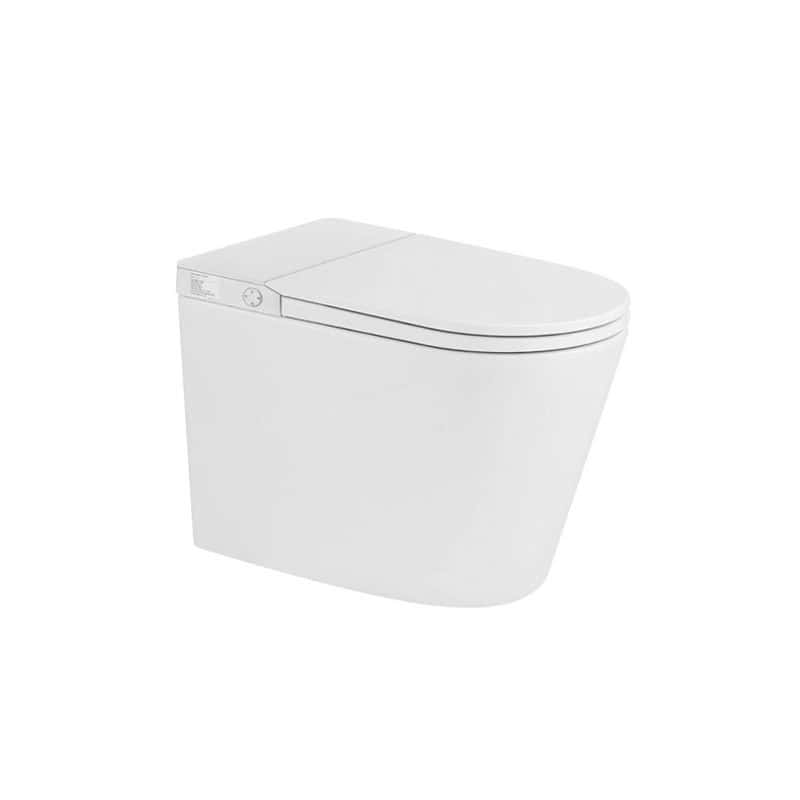
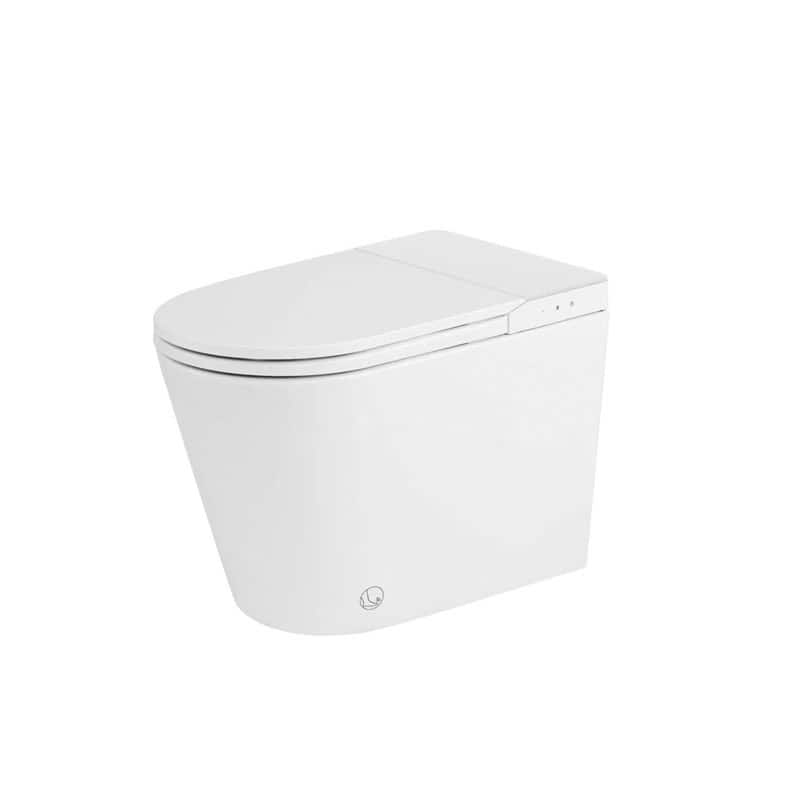
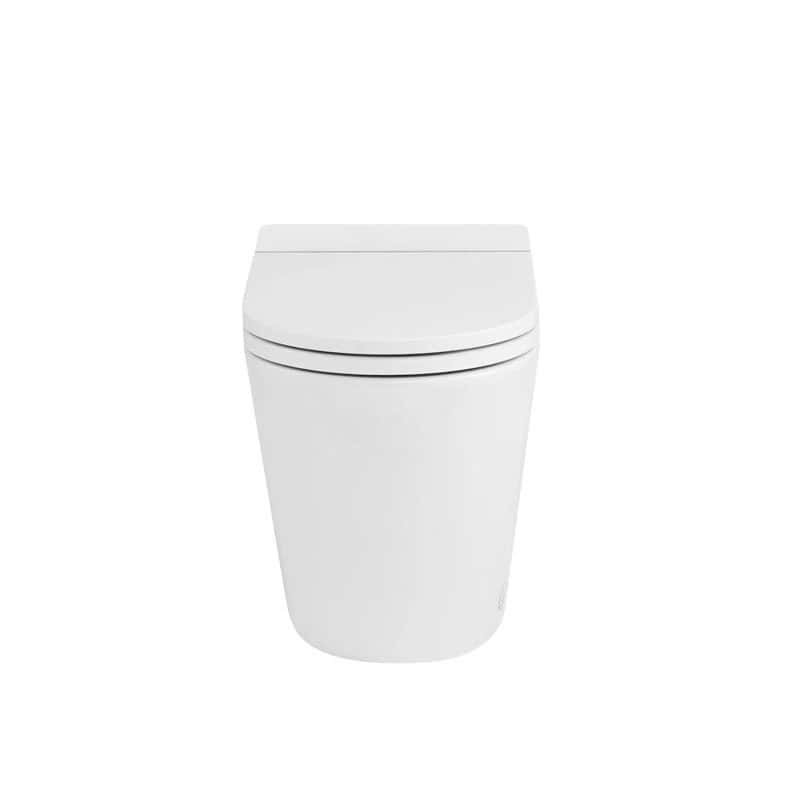
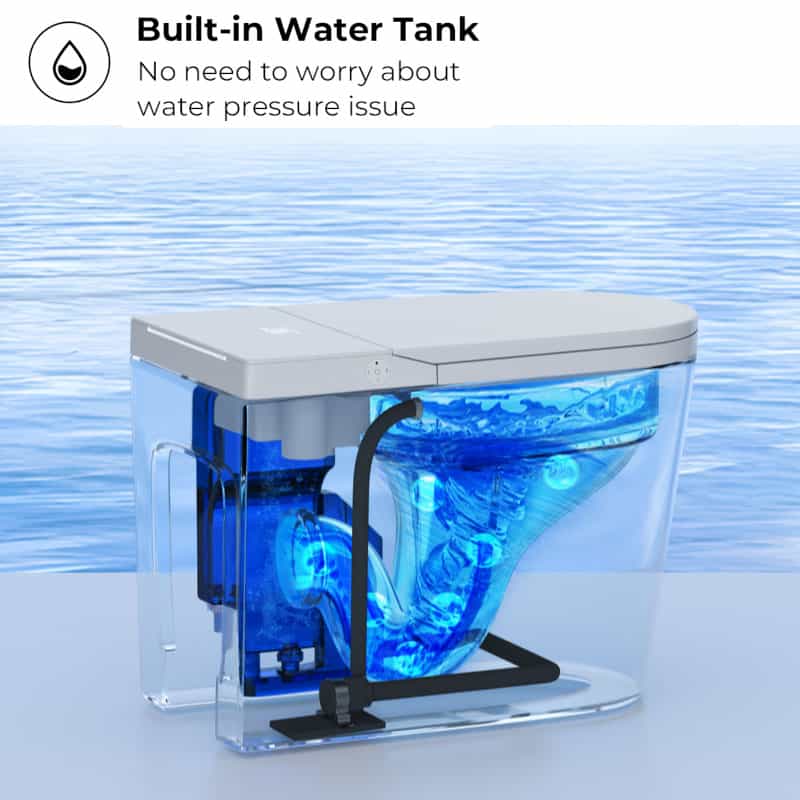
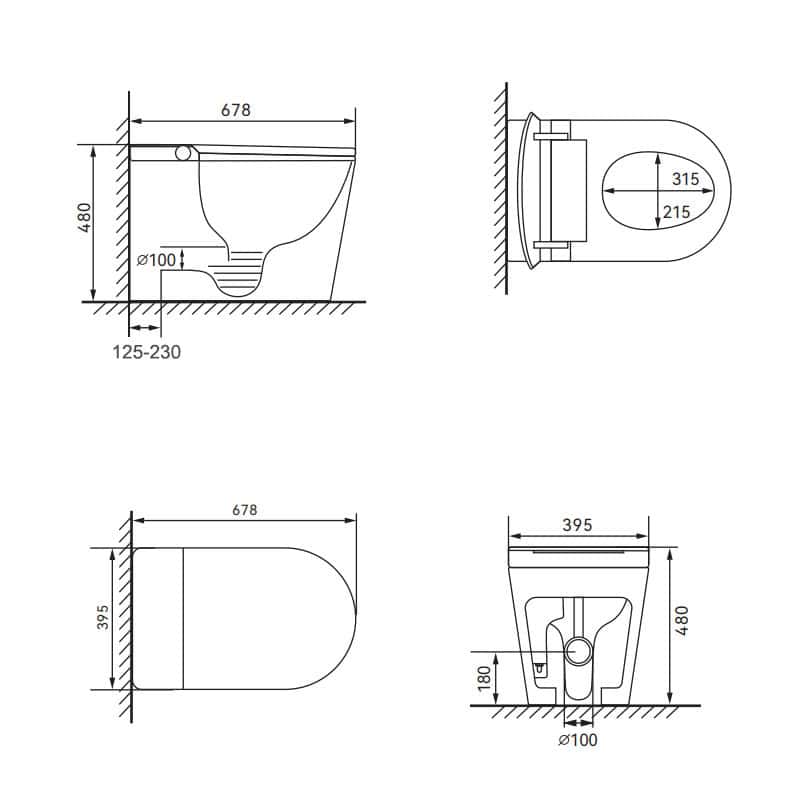
The Zenmo IQ Compact Smart Toilet fits the hands free smart toilet into a compact 678mm footprint by building the water tank in, so the intelligence no longer needs the full sized pan.
Hands free, rimless
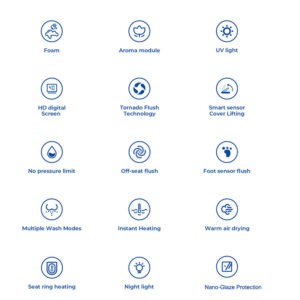
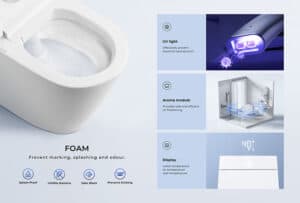
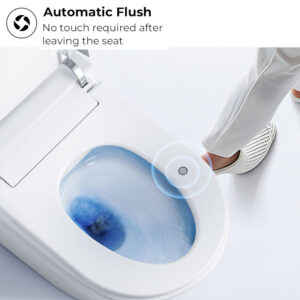
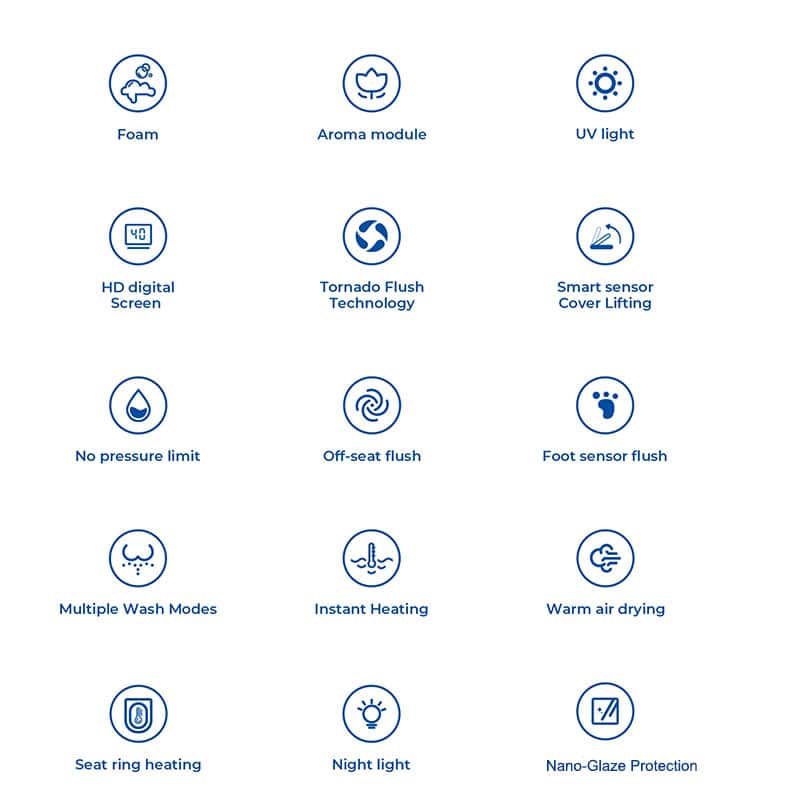
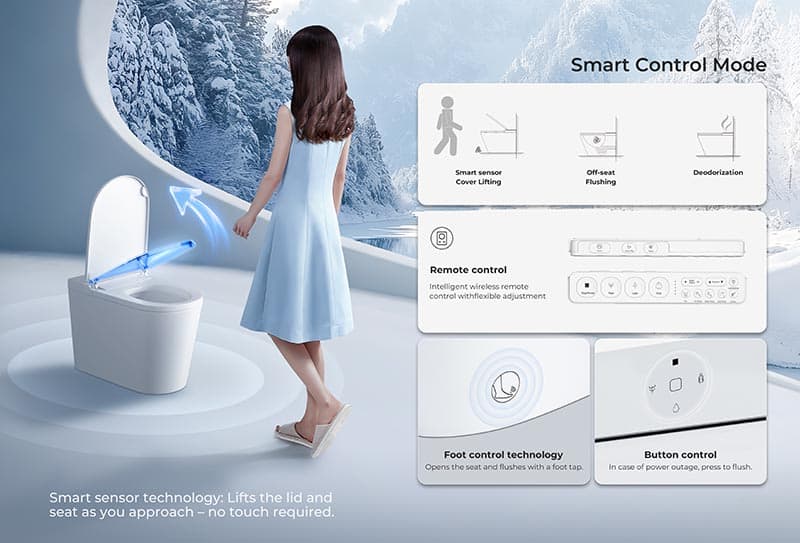
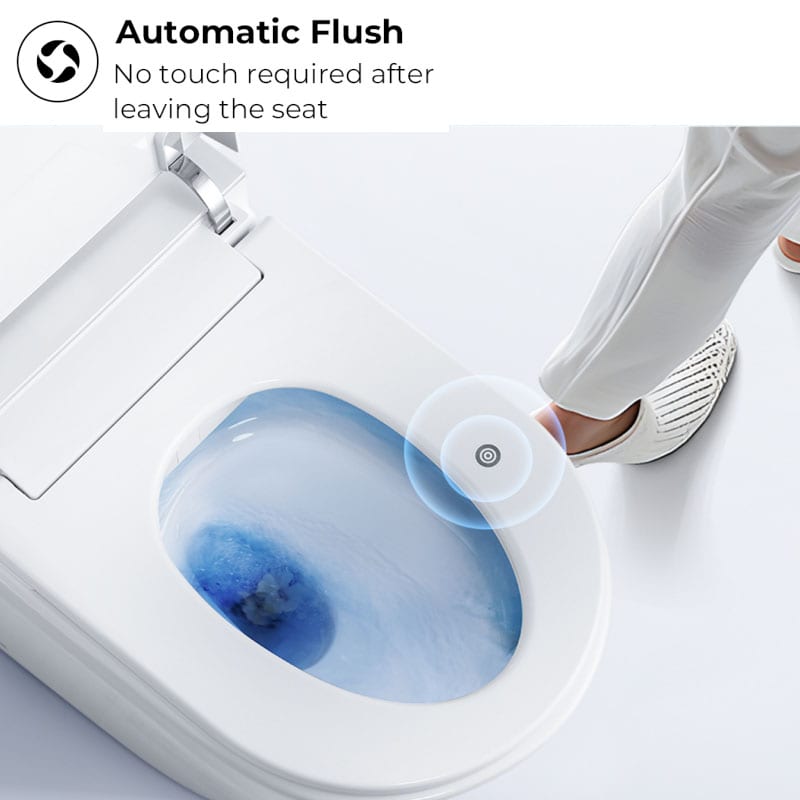
A hands free rimless tornado flush, with a backflow prevention valve and an air gap for back siphonage protection built into the water supply.
Fits the plumbing you have
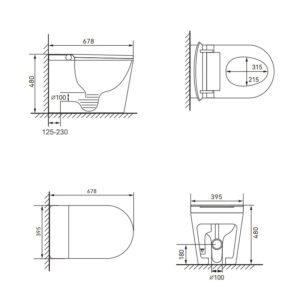
S-trap at a 125 to 230mm floor set-out or P-trap at 180mm. The water inlet connects at the bottom right and power at the bottom left.
Backflow protection
Any toilet with a bidet function has its water supply looked at more closely than an ordinary toilet, because there is a possible path between the bowl and the drinking water supply. This one is built for that.
What is built in
A backflow prevention valve complying with AS 2845.1 is supplied with the toilet. On the supply side there is more than that.
- Dual check valves on the water supply.
- An integral high hazard air gap complying with AS 2845.2 — Water Supply Backflow Prevention.
- Compliance with WMTS 051, and WaterMark certification to AS 1172.1 and AS 1172.2 (licence WMK26997).
An air gap is the oldest and most dependable form of backflow protection there is — water cannot travel back across an open gap of air. Building one into the appliance at high hazard rating is the difference between protection that is part of the toilet and protection that has to be bolted onto your plumbing.
Does that mean no RPZ valve?
Often, but it is not ours to promise. The installation guide is direct about it: check local regulations to confirm whether an RPZ valve is required as part of your installation. Requirements vary with the property, how it is classified and the rules of your water authority.
Worth a quick phone call
Ask your licensed plumber, or your local water authority or council, what applies at your address. It is a five minute question. If you are not sure who covers your area, send us the address and we will point you in the right direction.
It needs power
Washing, heating, drying, the sensors and the automatic functions all run on mains electricity, so a power point has to be available at the toilet. On a renovation this is the item that most often gets missed until the wall is closed up.
It runs on a standard 220–240V supply, and there are two ways to bring it in. Concealed wiring is permanent in-wall cabling, which is the tidy option and has to be planned before the wall closes up. Exposed wiring plugs into a normal Australian outlet, and that outlet needs to sit within a metre of the toilet.
Power can be routed behind the pan for a fully hidden installation, or brought in through the access openings on either side of the base. A leakage protection device is fitted to the power cord. All electrical work must be carried out by a licensed electrician in accordance with AS/NZS 3000.
Specifications
- Type — smart toilet with built-in water tank
- Size — 678 x 408 x 480mm
- Flush — hands free rimless tornado, 4.5 litres full and 3.1 litres half
- Water rating — WELS 4 Star
- Set-out — 125 to 230mm (S-trap), 180mm (P-trap)
- Connections — water bottom right, power bottom left
- Protection — IPX4 rated, backflow prevention valve, air gap
- Materials — ceramic pan, UF seat cover, PP seat
- Weight — 55kg